Analysis
Forensic analysis
The scorecard, anomaly register, root causes and remediation plan.
Forensic Analysis is a deeper pass than the DCMA assessment, organised the way a forensic delay analyst reports. It's included in Team and Enterprise plans.
The five sections#
1. Executive scorecard. A weighted health score out of 100, a composite verdict, and claims vulnerability: how exposed the programme would be if it had to support or defend a delay claim. The metrics are Acumen-style:
- missing logic, logic density (counted at both ends of each link) and relationship diversity;
- leads, and long lags (over 5 days or 20% of the predecessor's duration);
- hard and soft constraints, and negative float traced to the constraint producing it;
- high float and high duration;
- merge and diverge hotspots, counting only neighbours still open;
- dangling logic.
2. Critical path and float. The longest path recomputed from logic alone, whether it runs unbroken from the data date to a completion milestone, the near-critical work, and whether stored float can be trusted.
3. Anomaly register. Every flagged activity with its fault and claim exposure.
4. Root causes. Flagged and critical work grouped by kind, such as design, approvals, procurement, access, weather, enabling, installation and testing, from the wording of activity names.
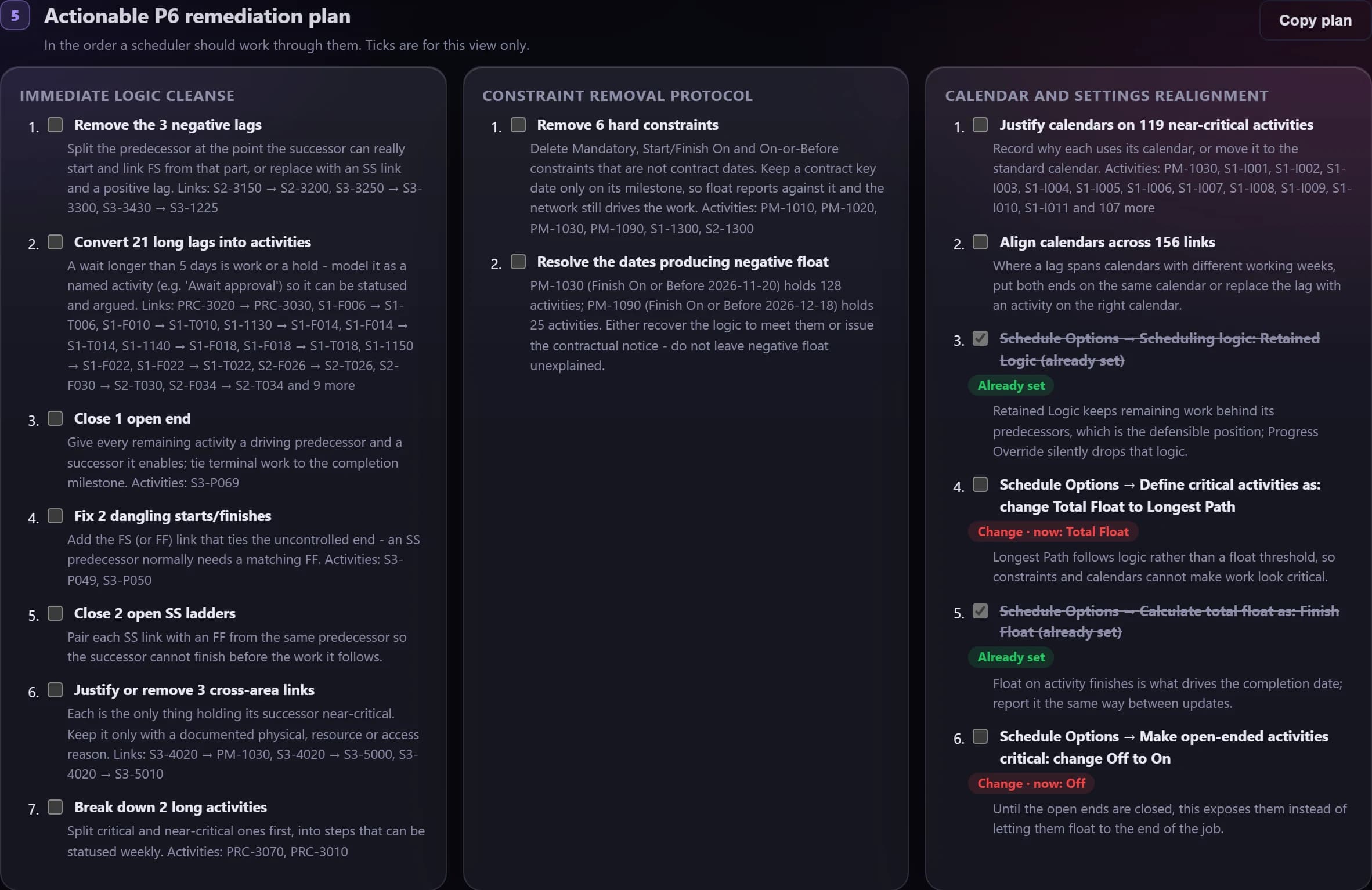
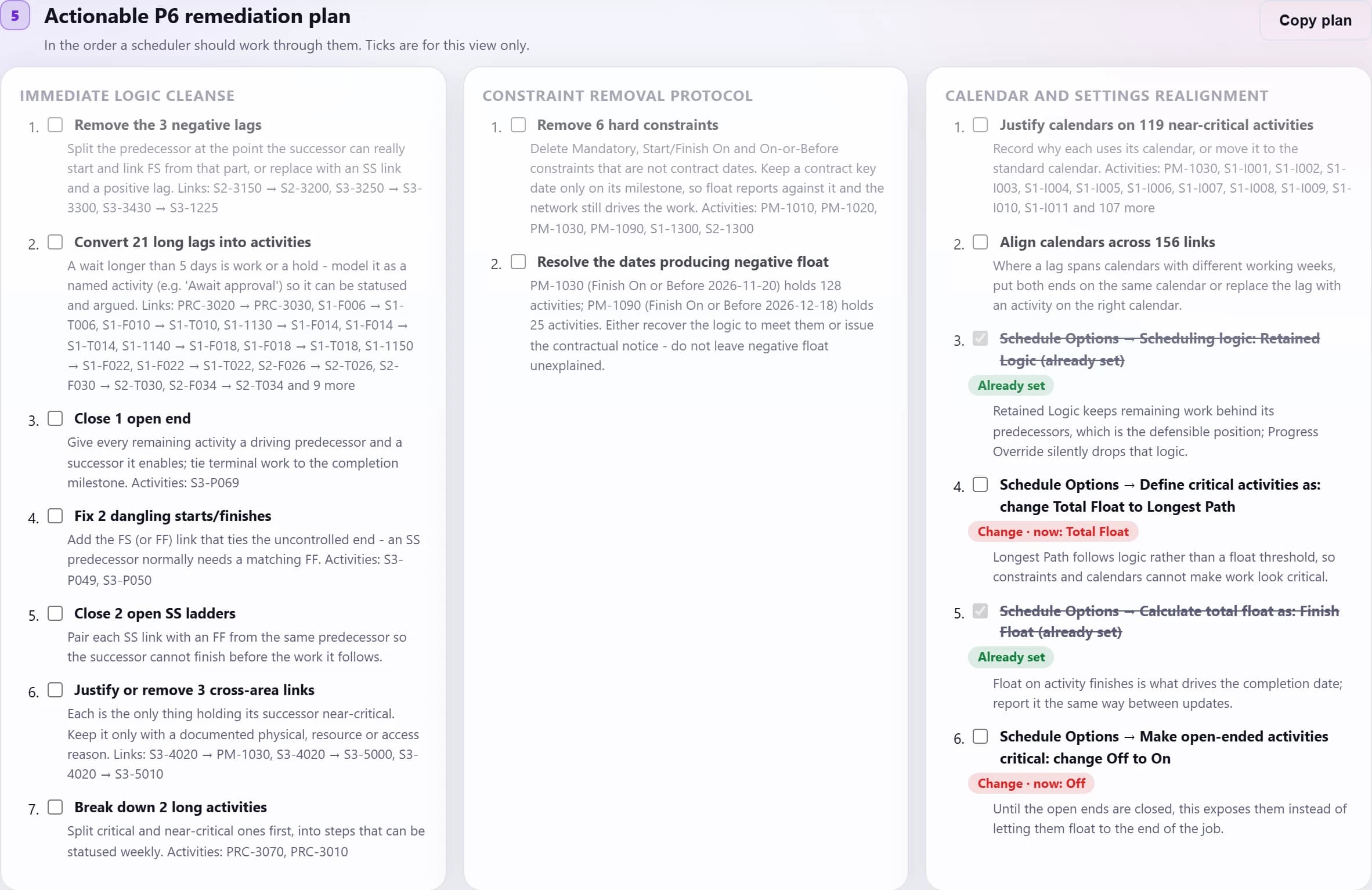
5. Remediation plan. Specific links, constraints and P6 scheduling options to change, in the order a scheduler should work through them. Each scheduling option shows the value the file has: already set, change, or check in P6 where the export doesn't carry it.
Float reliability#
The app reads P6's own scheduling options from the XER, recomputes float under the same options (open-ended activities made critical, for example), and compares it with the stored float. Where they differ, it says where the difference comes from: negative float a constraint produces, or links the stored dates break, which shows the file was edited after its last schedule run.
With two updates#
Load a second update and the analysis adds:
- Half-step attribution: the current update's progress is applied to the previous update's logic and durations. What moves the finish there is progress; the rest came from revisions.
- Where each critical delay started.
- Liability mapping: candidates for who owns each delay, with the evidence. Liability is only ever a suggestion until a person assigns it; the assignment is saved with the session.
- Concurrency and pacing flags, shown as candidates with their evidence, never as conclusions.
The workbook#
Export writes the whole analysis to Excel. The screen shows the first rows of long lists and says so; the workbook carries every row.